Newsroom2025-02-18T09:24:00+00:00

THE NEWSROOM

Media Training pUpdate w/c 20th April

Tabloid Disruptors


Edition 532

Morning, it’s Monday 20th April.

In 23 million years of media training I’ve never told a single person they talk too slowly on air. Let’s kick off this week with 5 reasons why we talk too quickly:

Pace


1 – We speed up over the familiar. Phrases and sector specific terms we are used to using regularly will be rattled off at 100mph. It’s exactly the point in the narrative where we need to slow down. 


2- We speed up when we’re
nervous. Being in the right headspace for interviews is crucial and something we get into at length in media training sessions. 


3 – We speed up when we are
overly-energised. Conviction is important in interviews but not at the expense of a well-paced delivery. 


4 – We speed up when we are trying to
say too much. Trying to cram in those five crucial factors in one answer will inevitably cause us to rush.


5 – We speed up when
other people are speeding up. If a fellow guest or a presenter pressed for time is talking quickly, don’t let their pace become ours. 

“In the opening days of the war, as missiles lit up the sky and the outside world scrambled for information, CNN’s Frederik Pleitgen made his way into Iran – driving nine hours to the border, then walking the final mile across on foot, hauling gear along a gravel path into a country suddenly at war.”

The Poynter team talk to Frederik about what happened next…

Monday: Keir Starmer addresses MPs on Mandelson vetting scandal.

Tuesday: Possible strikes begin on the London Underground.

King Charles hosts reception to mark 100th anniversary of the birth of Queen Elizabeth II.


Wednesday: Two-week ceasefire between the US and Iran expires.

UK inflation data.


Thursday: UK public sector finances data.


Friday: Final day of committee stage debate on the assisted dying bill in the House of Lords.


Saturday: Trump attends White House Correspondents’ Association dinner


Sunday:
London Marathon.

Footnotes:

“There is a supreme irony. It’s very difficult to be a tabloid disruptor in a world that has become so tabloid.” David Yelland 


The FT asks if the traditional British tabloid can survive the digital age. It’s behind a (very high) paywall I’m afraid, but well worth a read if you are a subscriber.


___


In (loosely) related news I’m talking a lot in media training sessions at the moment about the ascendancy of the newsletter in the print and digital landscape. Here’s some more evidence of that, reported in Press Gazette: 

12 months on from its launch
the Telegraph’s newsletter From the Editor has become its biggest source of new paying subscribers. Read by more than 850,000 people every day, it has a total audience list of two million, with subscriber conversions “running into the tens of thousands”.


More on this in the weeks to come.

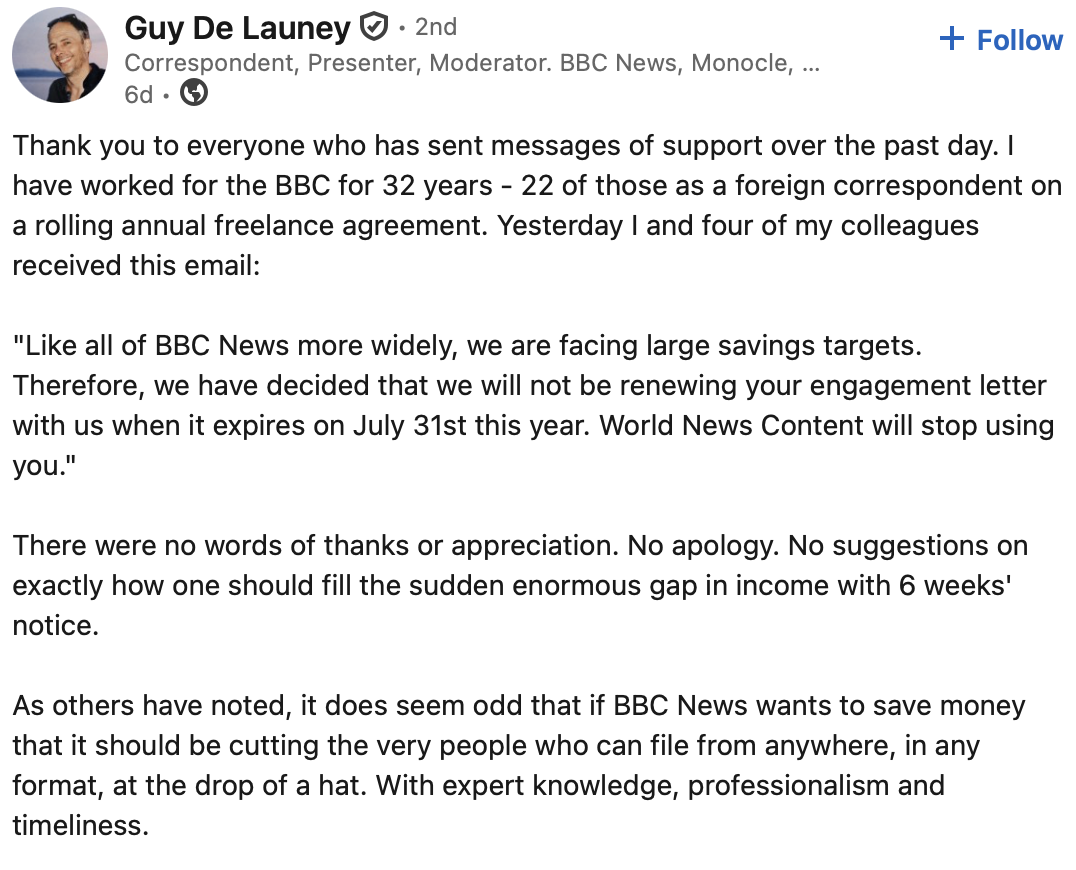
Brutal cuts at the BBC. One in ten jobs are to go. Read more

On This Day: The Apollo 16 manned mission to the Moon lands after a seven-hour crisis which nearly aborted the mission on this day in 1972.


Our Week:
Oxford and London this week for us.

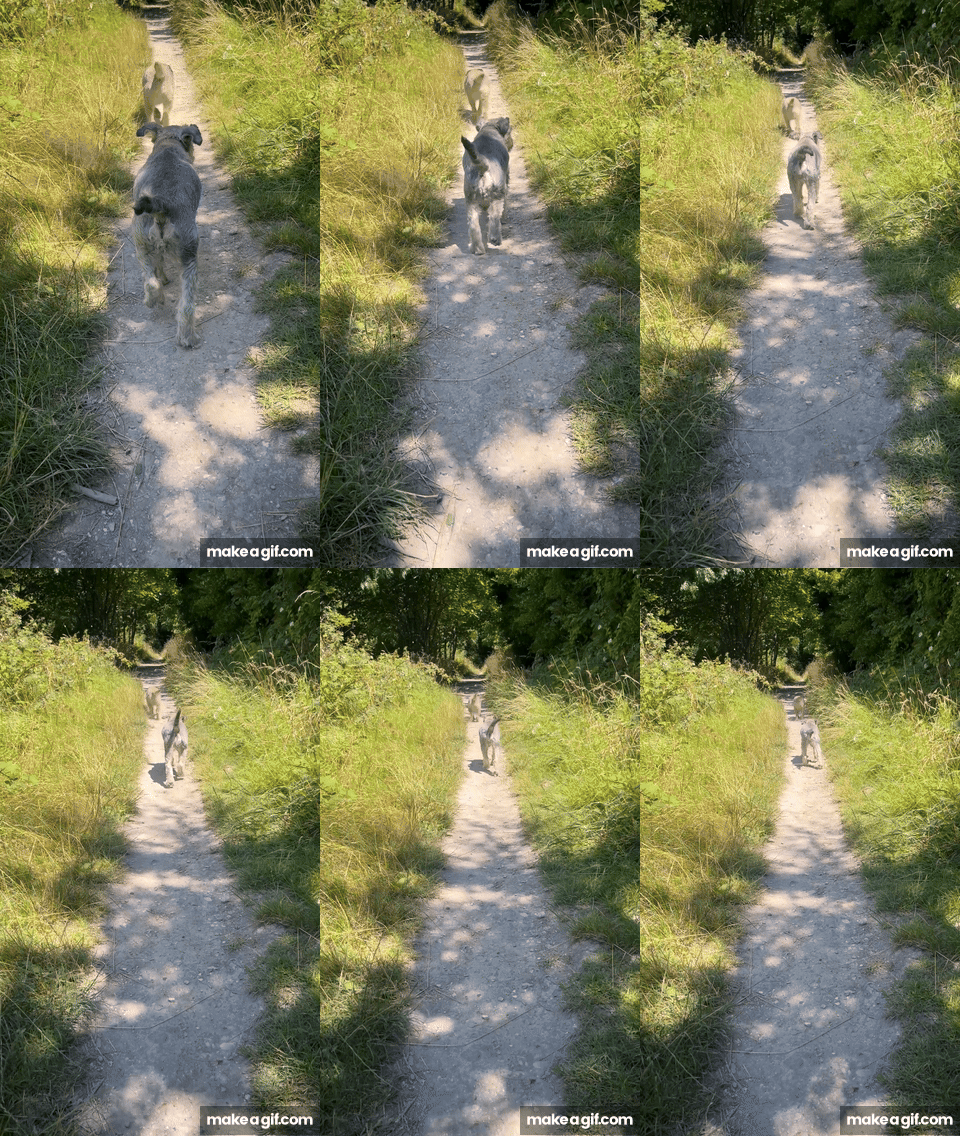
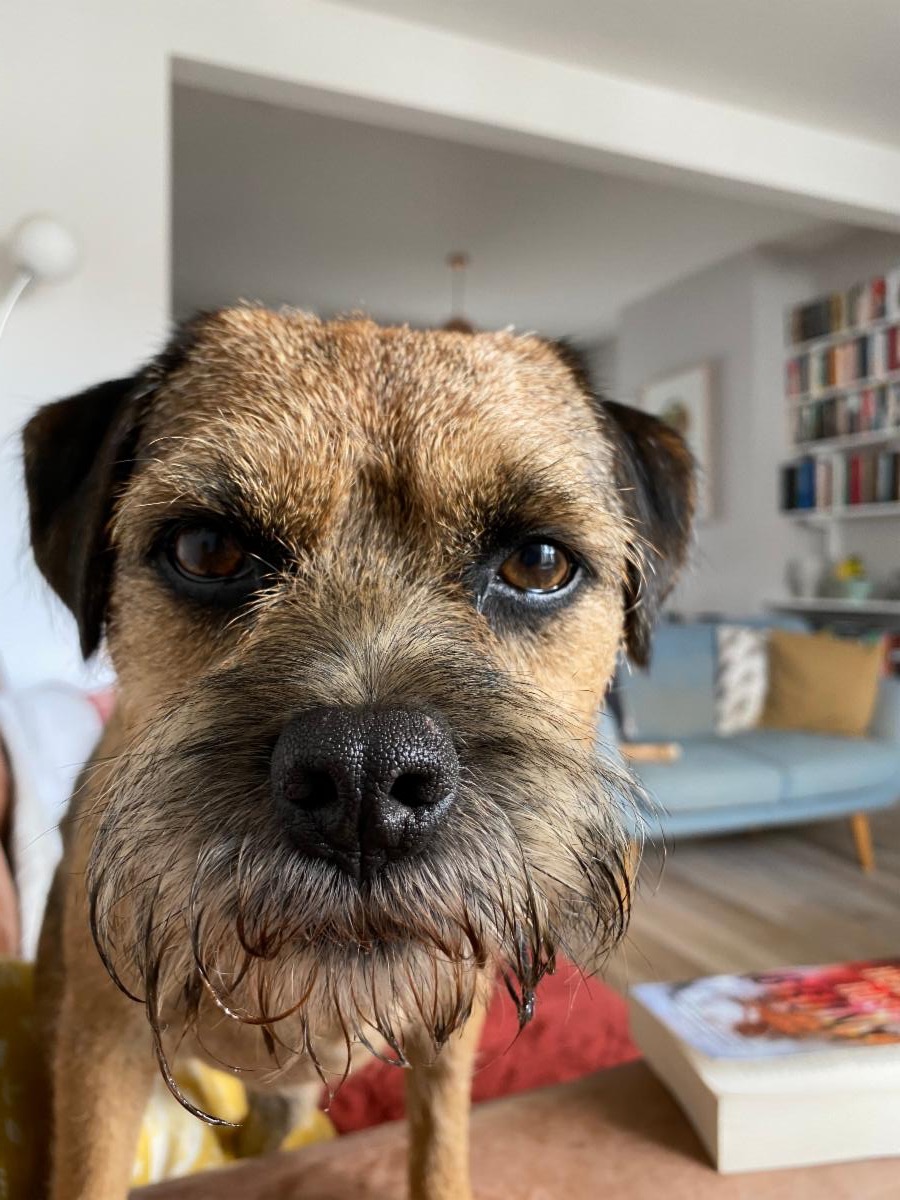
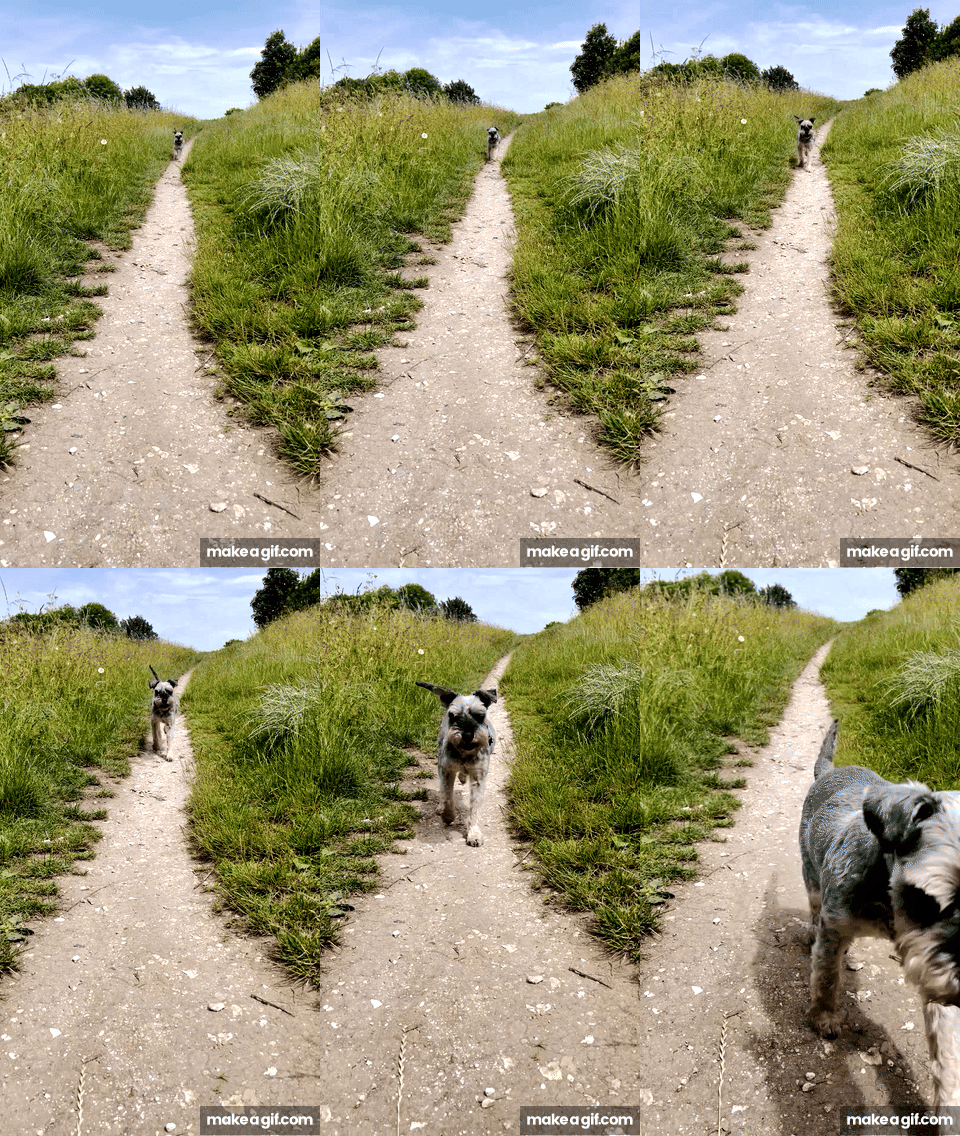
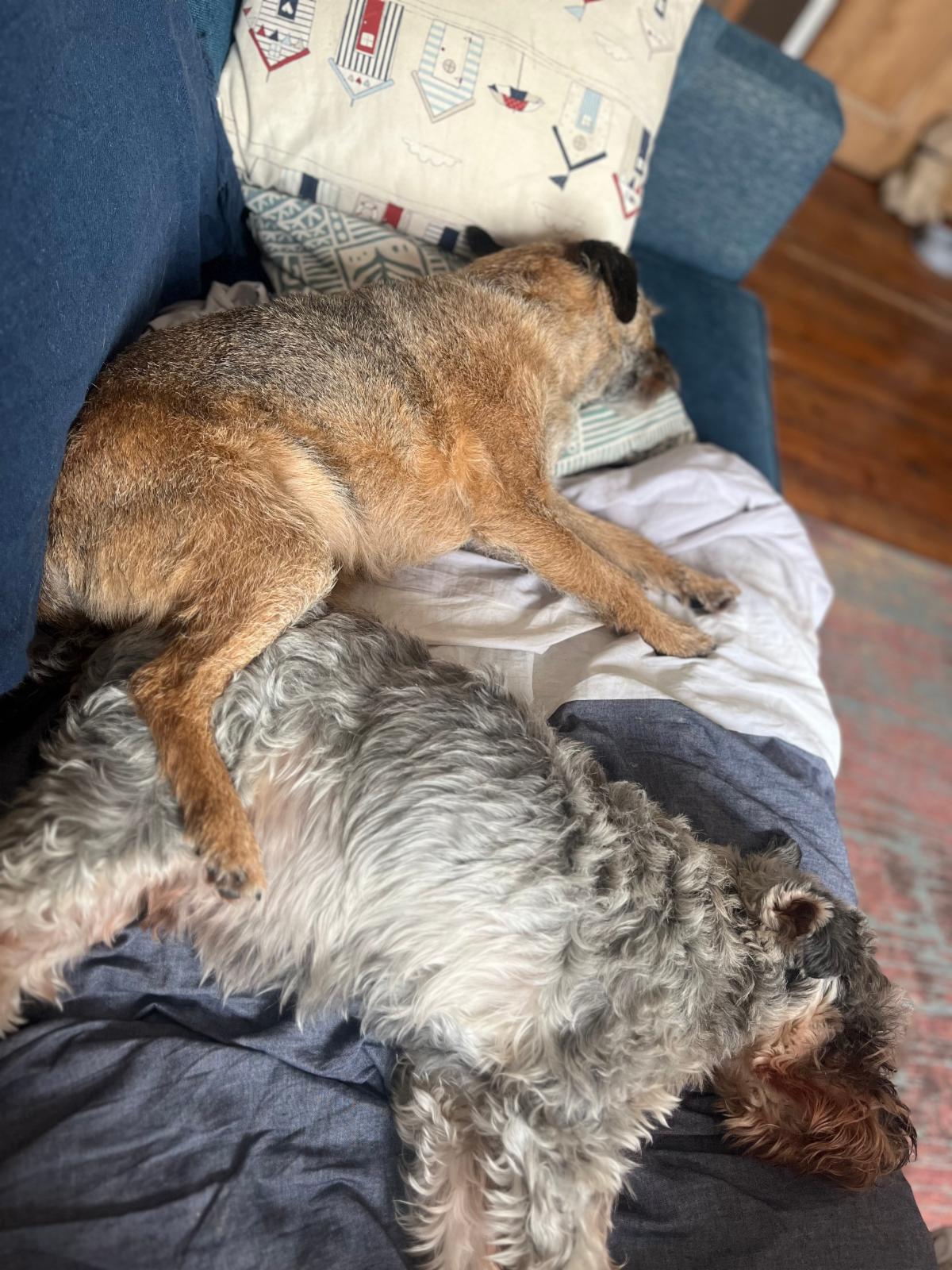
The Mutt Photo: Peaceful times for Stan who is much happier with life now. (Thank you to those who checked up on him recently.)

Be part of the MMB. Thoughts on this week’s content, or interviews you’ve seen, heard, or (best of all) done, please let us know.

Back on Monday. Have a brilliant week.


All at Inside Edge

LinkedIn  Twitter

Inside Edge Training | The Centre, 201-203 London Road | East Grinstead , RH19 1HA GB

By |21 April 2026|

Media Training Update w/c 13th April

The Full English


Edition 531

Morning, it’s Monday 13th April…

There are now over 200 counties in the US without a single news outlet. 
There are now over 1,500 with only one.

“The festering, 20-year-old problem? Digital news sites don’t come close to replacing the number of newspapers and journalism jobs being lost. And the digital news providers are almost entirely concentrated in metro areas, leaving vast swaths of the country with little to no access to local news.”
Professor Tim Franklin,
Medill Local News Initiative


Source

Monday: Findings published from the first phase of the Southport Inquiry.

Tuesday: Lionesses host Spain in World Cup qualifier.


Wednesday: G7 finance ministers and central bank governors meet in DC.


Thursday: Covid Module 4 report.
Monthly estimate of GDP.


Friday: BMA resident doctors hold conference following latest strikes.


Saturday: National housing demonstration in London.
Iranian President Masoud Pezeshkian expected to deliver speech to mark National Army Day.

The lead-up to a live studio interview…


1) Beware of careless chatter with the producer on the way to the studio

It’s often a fairly long walk from reception to studio. Keep the conversation banal. Don’t reveal confidential information, doubts about the veracity of your evidence, or whether you are the right person to be doing the interview. I’ve heard all of these over the years.


2) Expect to be kept waiting

It’s always worth checking as soon as you arrive whether the running order is on schedule. Accept (within limits) that a delay is inevitable in live broadcasting – if you let it get to you, you’ll invariably be in the wrong headspace when the interview finally takes place.


3) Assume every microphone is open and every camera is live

You Tube is littered with examples of those whose reputation has been undermined by an ill-thought and off-the-cuff remark meant for closed doors but broadcast to the world.


4) Expect to be ignored by presenters in the lead-up to your interview

Particularly if you are part of a live sequence, programme junctions used to bring guests in and out of studios are often crucial opportunities for presenters to clarify urgent issues with the gallery. Their last priority is to make sure you are feeling at ease in the moments before the red light goes on.


5) Remember what you had for breakfast

This sounds ridiculous but it’s the sort of information you are often asked for by sound engineers who want to gauge the level on your voice. Say more than “toast”. Even if that’s all you had. Make something up – engineers normally need at least a sentence, and in the breakfast context we reckon that means describing the Full English.

Footnotes:

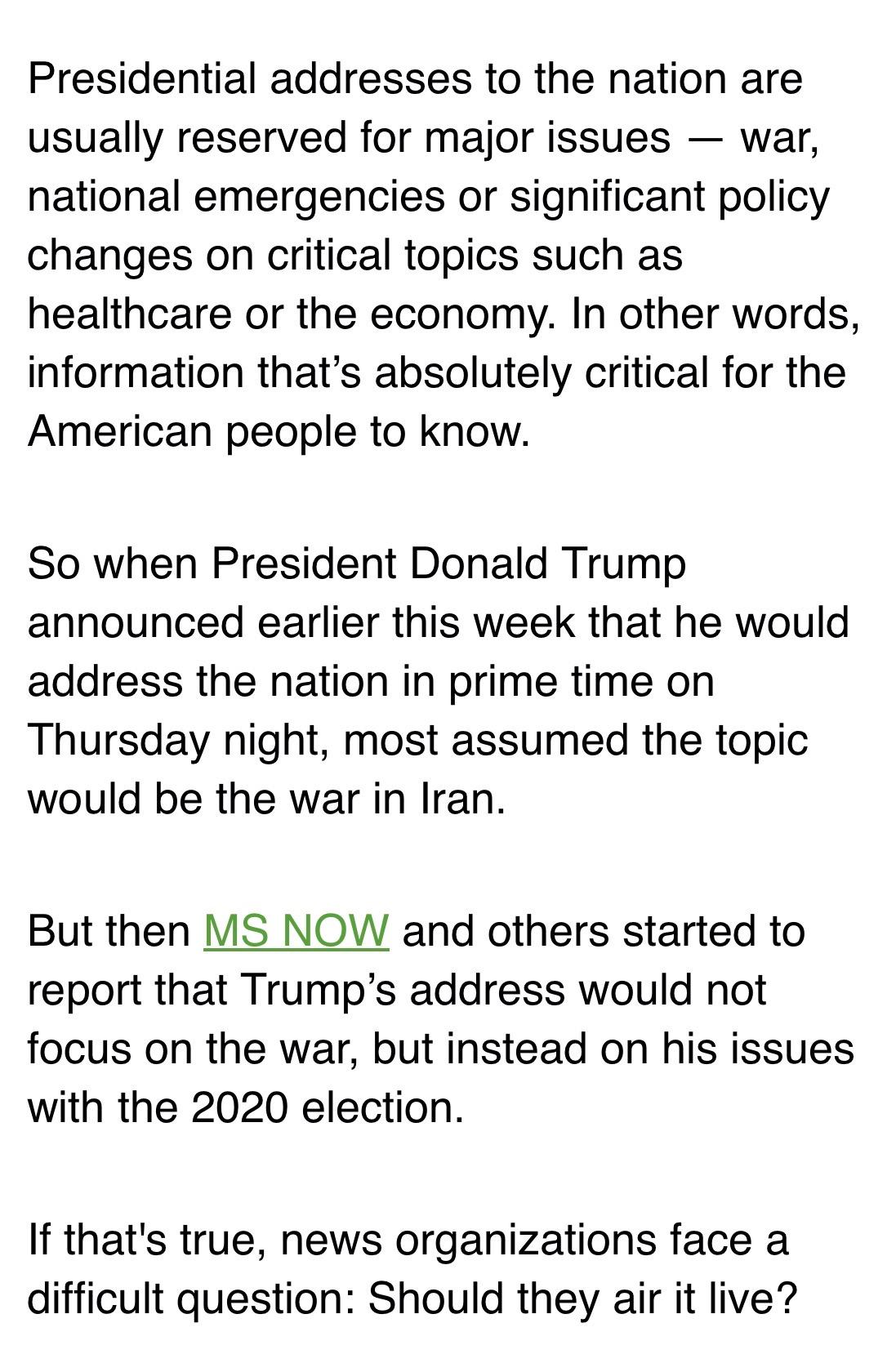
In the footnotes, a footnote (for our times), from the New York Times:

On This Day: Sidney Poitier became the first black person to win the best actor Oscar on this day in 1964.


Our Week:
London and Brighton this week

The Mutt Photo: Stay classy, Leo…

Be part of the MMB. Thoughts on this week’s content, or interviews you’ve seen, heard, or (best of all) done, please let us know.

Back on Monday. Have a super week.


All at Inside Edge

LinkedIn  Twitter

Inside Edge Training | The Centre, 201-203 London Road | East Grinstead , RH19 1HA GB

By |13 April 2026|

Media Training Update w/c 30th March

“Blue tights, red pants and a cape”


Edition 530

Morning, it’s Monday 30th March. (You are a quarter of the way through 2026.)


“A TV reporter who also has a TikTok page gives us regular updates on the situation. It feels comforting and more intimate than watching on TV news.”

I reference data from the Reuters Institute all the time, it’s a superb source. Their latest global report focuses on young people and their attitudes to news.

Top lines:

In 2015 young people’s main way of accessing news was through online news websites and apps of publishers. Today, their main source is social media.

18–24s have embraced audiovisual. They now rely on TikTok, Insta, and YouTube for news, overtaking Facebook, which was the dominant platform ten years ago.

On social and video networks, young people say they pay more attention to individual news creators (51%) than to traditional news brands (39%).

Young people are also less interested in news. One third (35%) of 18–24s compared with 52% of those 55+ say they are ‘very’ or ‘extremely’ interested. 


Read the full report.

Sticking with the same theme for a moment let’s move to the new BBC DG: 


“Currently, disastrously few 16- to 24-year-olds – tomorrow’s licence fee payers – watch the BBC. Ofcom says they spend just five per cent of their viewing time with the BBC, compared to 34 per cent for things like YouTube and TikTok. It will be difficult to argue we should be forced to pay £174.50 a year and rising if that trend continues.”

This is a quote from Jonathan Maitland’s take in the Spectator on Matt Brittin’s appointment, which is a bit waspish but pretty much on the money.

Monday: Financial Conduct Authority sets out its approach on motor finance redress scheme.

Tuesday: UK GDP National Accounts.


Wednesday: Energy price cap changes take effect.

Iran marks Republic Day.


Thursday: Tim Davie steps down as BBC director general.


Friday: County cricket season begins.


Sunday: New Archbishop of Canterbury Sarah Mullally delivers Easter sermon.

Why you might say no to an interview request…


1) No junctions reached

Remember that you need compelling and interesting content. If every answer is likely to be prefaced with, “it’s too early to say…” then it might be better to bide your time.


2) Your headspace

There might be all sorts of reasons why you are in the wrong headspace for an interview. Ultimately it is your reputation on the line as well as that of your organisation. Feel free to resist the (often internal) pressure if there is a personal reason why you don’t feel up to it on that particular day.


3) Track record of that programme 

Every programme has an online presence and every programme follows its own familiar format. Ask yourself – is this the sort of environment where I will be able to get a message across? If it isn’t, say no. Remember, some programmes simply set out to generate conflict between guests.


4) Nature of the interview format 

Is it live or pre-recorded? Is it in the studio or over the phone? Is it a 1-1 or a panel format? Is there a phone-in element? Any one of these might be a deal-breaker in terms of you agreeing to the interview.


5) No preparation time 

The good news is that you don’t need much time for interview preparation. The bad news is that on occasions journalists may be reluctant to give you any preparation time whatsoever. Always create space. If a print journalist wants a quote immediately, or a radio producer wants to transfer you to the studio for a live phone interview, play for time. “A very important meeting for the next 20 minutes” usually works a treat…

Footnotes:

On This Day: President Ronald Reagan was shot and wounded when a lone gunman opened fire in Washington on this day in 1981.


Our Week:
Didcot, Cambridge and Brighton. 
(Then up to Northumberland for a few days over Easter.)

The Mutt Photo:

Be part of the MMB. Thoughts on this week’s content, or interviews you’ve seen, heard, or (best of all) done, please let us know.

Back in a fortnight. Go well.

All at Inside Edge

LinkedIn  Twitter

Inside Edge Training | The Centre, 201-203 London Road | East Grinstead , RH19 1HA GB

By |30 March 2026|

Media Training Update w/c 23rd March

“Um…was I OK?”


Edition 528

Good morning, it’s Monday 23rd March.

“It’s staggering that this 103-year-old organisation has had 17 director generals and they were all guess what? Ah yes. Men,” 
The words of the legendary Dame Jenni Murray,
who died last week.


In other news…

Barring an eleventh hour twist, former Google exec (and man) Matt Brittin will be the next. More on this next week.

Culture Secretary Lisa Nandy’s speech to the Society of Editors is worth a quick read.

“I have a phobia of foam” was a new one on me last week, but hey – media training remains nothing if not surprising. The mic cover was removed ahead of the interview and disaster narrowly averted…

The war in the Middle East will continue to dominate the news agenda, however also in the diary for this week…

Monday
: Keir Starmer questioned by Liaison Committee on Iran and economic security. 

WMO publishes State of the Climate report.

Tuesday: BAFTA television awards nominations.


Wednesday: UK inflation figures.


Thursday: Joint Expeditionary Force leaders, likely including Keir Starmer, meet in Finland.


Friday: England Men v Uruguay football friendly


Saturday: One month since the start of the Iran war.

“Um…was I ok?” 


I know that getting honest, constructive feedback after going on air isn’t easy. Here are five options to weigh up:


1) The producer

Possible but unlikely. Producers are busy and won’t prioritise feedback. Ask when the initial bid is made from the journalist. “I’m happy to do the interview but I’d really appreciate some feedback”.

2) Your press officer

Sometimes reluctant to feedback negatively, particularly if they are in a more junior role to you. One tip is to ask for 2 positive and 2 negative comments from the interview.

3) A critical friend

Someone completely unrelated to your topic – did the language work for them? Did the story have sufficient impact?

4) Listeners/Viewers

Social media is a very warped filter from which to glean feedback, so take comments with a large bucket of salt, but observations can occasionally be extremely perceptive and well-informed.

5) You

Always listen and watch back interviews you undertake. Virtually all programmes are online after broadcast. Critique yourself fairly but don’t forget to reflect on the positives. We tend to skate over the good stuff.

The government will increase funding of the BBC World Service over the next three years. The Foreign Office will boost funding by an additional £11m per year for the next three years – a total of £33m and an 8% increase on the previous year’s government contribution.

WS “offers clarity, accuracy and an independent voice where reliable information is increasingly difficult to access”. Foreign Secretary Yvette Cooper

Footnotes:


Seen
The Economist front cover?

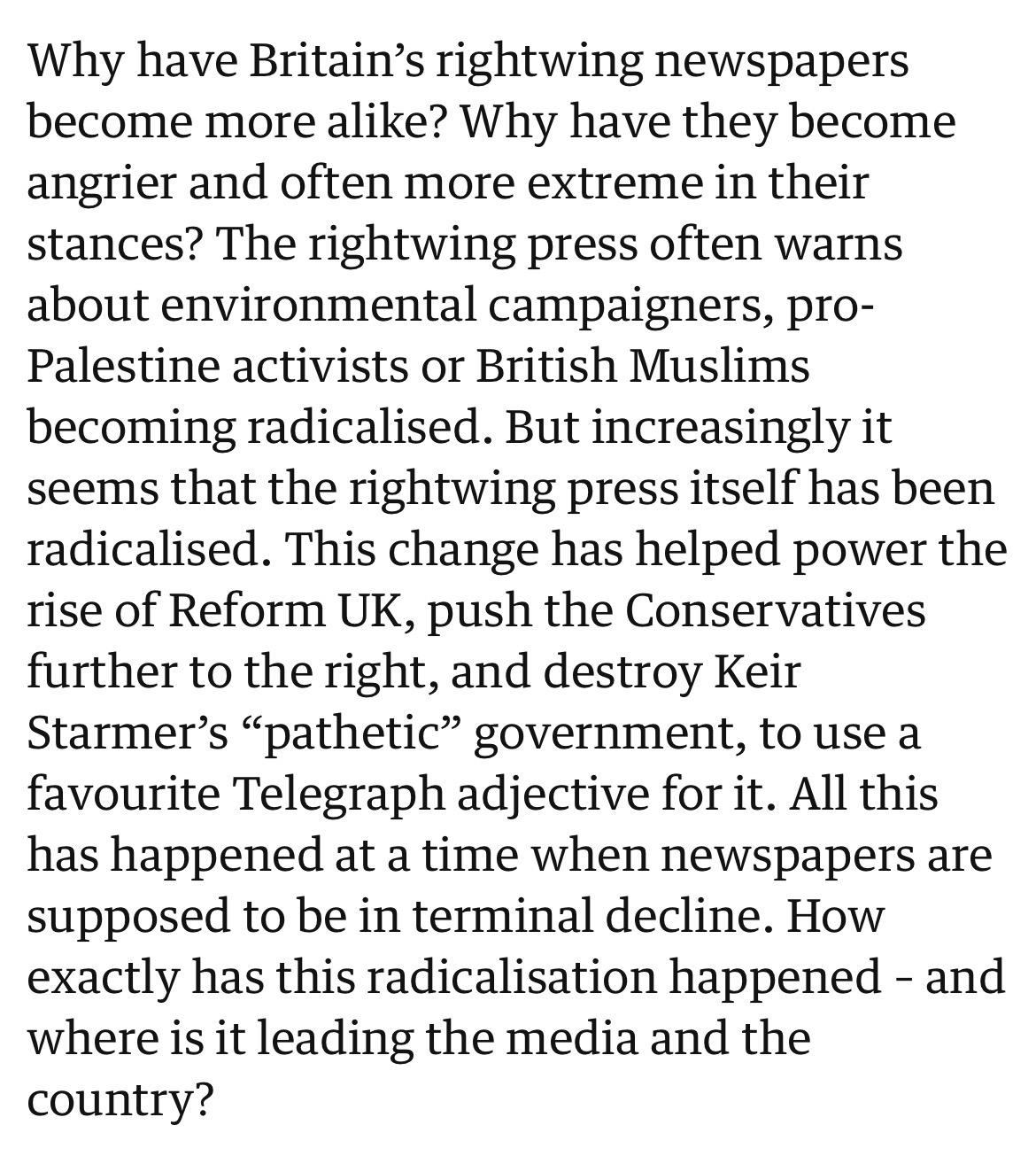
“GB News has essentially become Reform TV. The broadcasting regulator, Ofcom, has more or less given up the ghost. And Nigel Farage is laughing all the way to the bank.”

Alan Rusbridger’s investigation into GB News is well worth a read

On This Day: The government banned all animal transport to contain an outbreak of foot-and-mouth disease on this day in 1981.


Our Week:
Exeter (deliciously via a rail replacement bus) and Brighton for us.

The Mutt Photo: 

Stan has been pretty poorly this week – he’s nearly 14 after all – so here’s a photo of him in much younger days to cheer the spirits…

Be part of the MMB. Thoughts on this week’s content, or interviews you’ve seen, heard, or (best of all) done, please let us know.

Back next Monday. Have a super week.

All at Inside Edge

LinkedIn  Twitter

Inside Edge Training | The Centre, 201-203 London Road | East Grinstead , RH19 1HA GB

By |23 March 2026|

GET IN TOUCH

LET’S DISCUSS YOUR REQUIREMENTS

    Name

    Organisation

    Your Email

    Your Message

    Go to Top